
If you’re waking up with a sore lower back, stiffness through the middle of your spine, or one-sided back pain that eases as the day goes on — you’re not alone.
And no, it’s usually not your mattress, your pillow, or the way you slept.
Morning back pain is one of the most common complaints we see at Burleigh Biomechanics, and it’s often misunderstood because people focus on what hurts — not why it’s happening.

Why back pain feels worse in the morning
When you sleep, your body isn’t “resetting” — it’s adapting to the positions and loads it’s been dealing with all day.
If your back is already under strain, reduced movement overnight can lead to:
increased stiffness
localised inflammation
uneven muscle tension
joint compression
That’s why people often say:
“My lower back hurts as soon as I wake up.”
“The middle of my back aches in the morning but improves once I move.”
“My lower back hurts on the right (or left) side every morning.”
Movement helps because it temporarily redistributes load — but it doesn’t solve the underlying issue.
The real reason your lower back keeps hurting
Back pain rarely comes from one structure.
In most cases, morning back pain is a load management problem, not a damage problem.
Common contributors include:
poor pelvic control during walking and standing
asymmetrical weight distribution between left and right sides
limited hip rotation forcing the lower back to compensate
ribcage and thoracic stiffness increasing lumbar strain
postural habits that overload the spine over time
Your back ends up doing work that should be shared across the hips, legs, and trunk.
So when you lie still overnight, those overloaded tissues are the first to complain when you wake up.
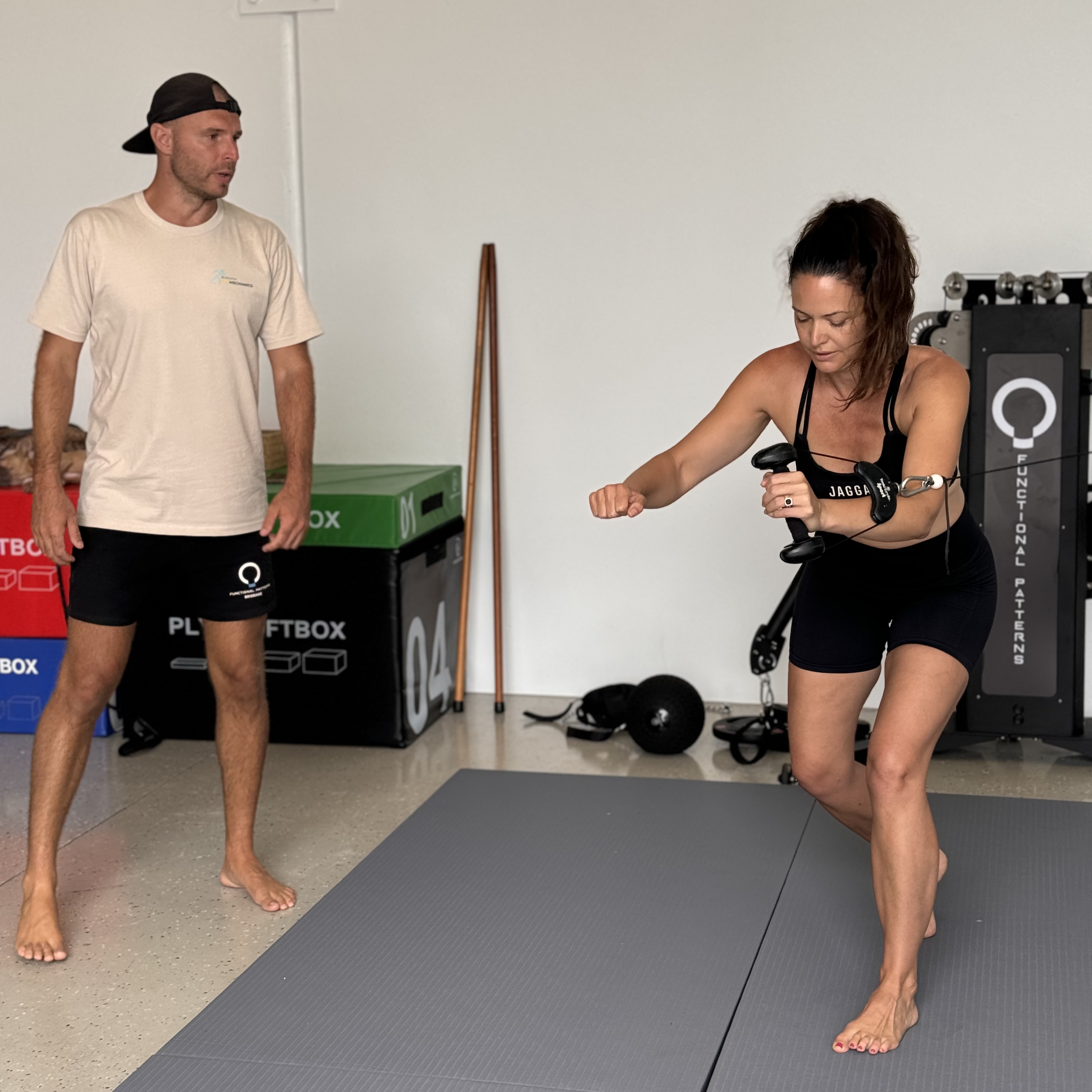
Why pain shows up on one side
If your lower back pain is worse on one side — right or left — that’s a huge clue.
One-sided back pain is often linked to:
asymmetrical gait mechanics
uneven hip extension
favouring one leg when standing
rotational imbalances through the pelvis and trunk
Stretching the sore side or strengthening “the core” won’t fix this — because the issue isn’t weakness or tightness in isolation.
It’s how your body is organising movement.
Middle back pain in the morning: what it usually means
If the middle of your back hurts, especially between the shoulder blades or through the thoracic spine, it’s often related to:
reduced ribcage movement
shallow breathing patterns
prolonged sitting postures
lack of rotation through the upper spine
When the upper back doesn’t move well, the lower back pays the price.
This is why many people feel stiff through the middle spine in the morning, then sore through the lower back later in the day.

Why “fixes” like pillows and stretching don’t last
Back support pillows, new mattresses, and stretching routines can reduce symptoms — temporarily.
But they don’t change:
how you walk
how you load your joints
how your spine behaves under daily stress
That’s why people say:
“I’ve tried everything, but my back pain keeps coming back.”
Without changing movement mechanics, relief is short-lived.
How Burleigh Biomechanics approaches back pain differently
At Burleigh Biomechanics, we don’t treat back pain as a local problem.
We assess:
how your pelvis and hips move
how load transfers through your spine
how left–right asymmetries show up in walking and standing
where your back is compensating for missing movement elsewhere
Our goal isn’t just pain relief — it’s redistributing load so your back doesn’t have to work overtime.
This is biomechanics therapy, not symptom chasing.
When to seek professional help
You should seek help if:
you wake up with back pain most mornings
pain keeps returning despite rest or exercise
pain is consistently one-sided
stiffness improves with movement but always comes back
you feel “locked” or guarded through your spine
These patterns suggest a mechanical issue that won’t resolve on its own.
Can back pain be prevented?
Yes — but not through avoidance.
Long-term prevention comes from:
improving walking and gait mechanics
restoring hip and trunk contribution
correcting postural load patterns
building strength in context, not isolation
When your body shares load efficiently, your back stops being the weak link.
Final thoughts
If you’re sick of waking up with a sore back, the problem likely isn’t sleep — it’s how your body is organised during the other 16 hours of the day.
Pain is a signal.
Your job is to listen to what it’s telling you — not silence it.
If you’re ready to address the root cause, Burleigh Biomechanics offers a biomechanics-based approach designed for lasting change, not short-term relief.