
How to Fix a Kinked Neck (and Why It Keeps Coming Back)
A kinked neck can come out of nowhere.
You wake up, turn your head, and suddenly:
your neck feels locked
movement is painful or restricted
the ache runs into your shoulders or upper back
Most people assume they “slept wrong” — stretch it, massage it, wait it out.
Sometimes that helps.
Often, the kink comes back.
At Burleigh Biomechanics, we see this pattern all the time — and the neck is rarely the true problem.

What a “kinked neck” actually is
A kinked neck isn’t usually an injury.
In most cases, it’s a protective response — your nervous system limiting movement because something upstream or downstream isn’t managing load well.
The neck ends up:
overworking to stabilise posture
compensating for limited movement elsewhere
absorbing tension that should be shared across the body
That’s why neck pain often:
feels worse in the morning
improves as you move
then returns again days or weeks later
Why neck pain often shows up after sleeping
Sleep doesn’t cause most neck pain — it reveals it.
When movement drops overnight:
stiff areas don’t get relief
overloaded tissues become irritated
asymmetries show up first thing in the morning
If your body relies on your neck to hold posture during the day, it’s usually the first area to complain when you wake up.

The real causes behind recurring neck pain
A kinked neck is often linked to:
poor ribcage and upper-back movement
forward-shifted posture
shallow breathing patterns
limited rotation through the spine
inefficient gait mechanics
In other words, the neck is compensating for how the rest of the body is organised.
Stretching the neck treats the symptom — not the reason it’s under stress.
Why quick fixes don’t last
Heat, massage, stretching, and rest can reduce discomfort temporarily.
But they don’t change:
how you walk
how load transfers through your trunk
how your spine behaves during daily movement
That’s why people say:
“I keep getting a stiff neck — it always comes back.”
Without changing movement mechanics, the neck remains the weak link.
How Burleigh Biomechanics approaches neck pain differently
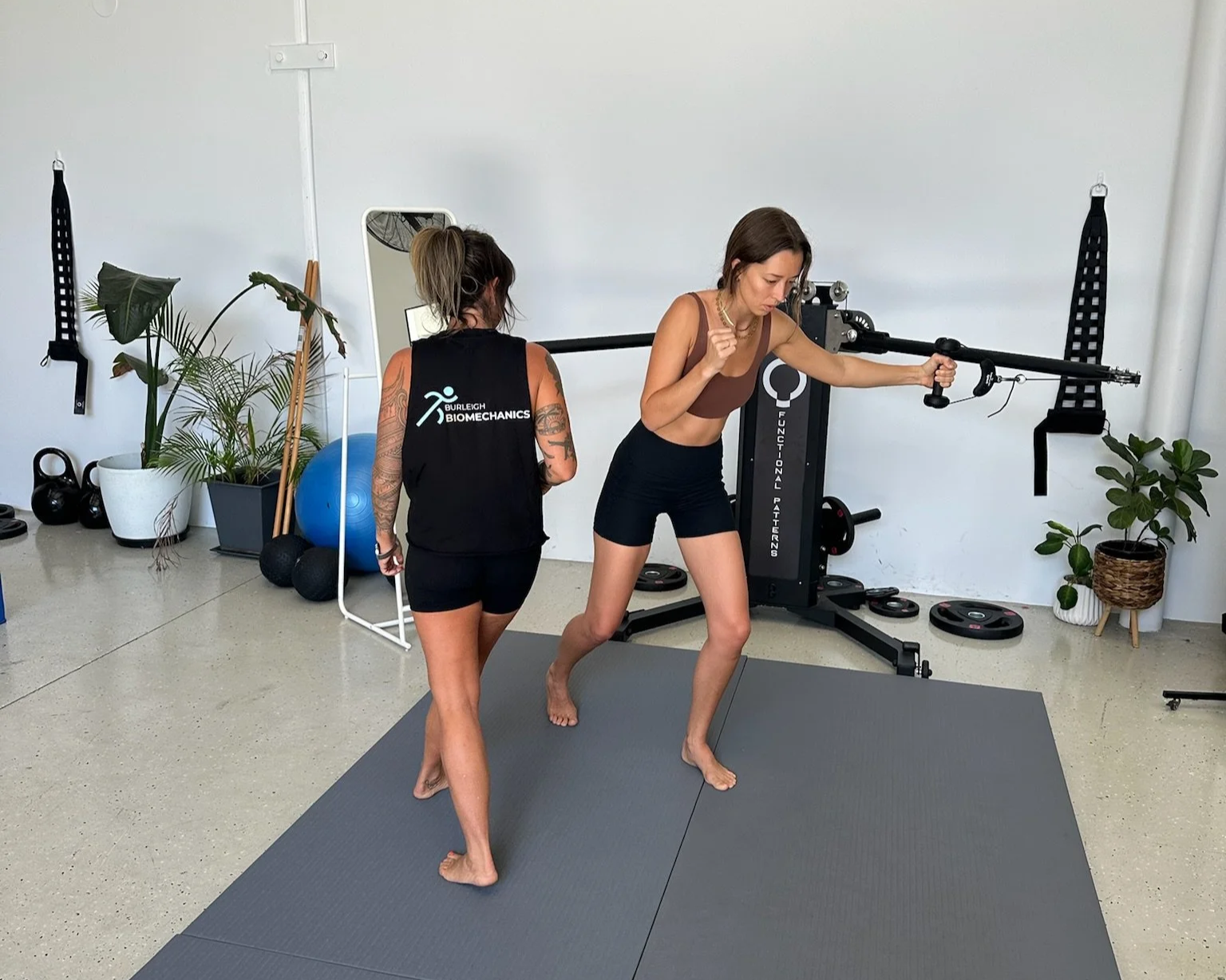
At Burleigh Biomechanics, we don’t treat neck pain as a local issue.
We assess:
how your ribcage and upper back move
how your head stacks over your trunk
how forces travel through your spine during walking and standing
where your neck is compensating for missing contribution elsewhere
The goal isn’t to “fix” the neck — it’s to remove the need for it to overwork.
When load is shared properly, neck tension often resolves naturally.
When a kinked neck needs professional help
You should seek assessment if:
neck pain keeps returning
stiffness lasts more than a few days
pain spreads into shoulders or upper back
you feel restricted turning your head
neck pain accompanies headaches or upper-body tension
These signs point to a mechanical pattern, not a one-off strain.
Can neck pain be prevented?
Yes — but not by avoiding movement.
Long-term neck relief comes from:
restoring upper-back and ribcage movement
improving posture dynamically, not statically
distributing load through the whole body
improving gait and trunk coordination
When the system functions better, the neck stops being overused.
Final thoughts
A kinked neck is rarely random — and it’s rarely just the neck.
If your neck keeps locking up, aching, or feeling stiff, the problem is usually how your body is organising movement, not how you slept.
At Burleigh Biomechanics, we focus on restoring efficient mechanics so neck pain doesn’t keep returning.
Looking for lasting relief?
If you’re tired of managing neck pain and want to address why it keeps happening, a biomechanics-based assessment may provide answers that symptom-based care misses.
Burleigh Biomechanics works with the whole system — not just where it hurts.