
A Root-Cause Perspective from Burleigh Biomechanics
If your hamstrings always feel tight — no matter how much you stretch, strengthen, rest, or rehab — you’re not alone.
Many people are told they have:
“Short hamstrings”
“Scar tissue”
“Weak glutes”
“A lingering hamstring injury”
Yet the tightness keeps returning.
At Burleigh Biomechanics, we see this pattern every week — and in most cases, the hamstring isn’t actually the problem.
What People Mean When They Say “Tight Hamstrings”
Most people assume tightness means the muscle is physically short or damaged. In reality, what you’re feeling is often protective muscle tone, not a lack of flexibility.
Hamstrings commonly increase tone when:
They’re being overused to stabilise the pelvis
They’re compensating for poor hip mechanics
The body doesn’t trust load transfer elsewhere
In other words, the hamstrings tighten because they’re doing too much, not because they’re failing.
Why Hamstring Tightness Keeps Coming Back
Recurrent hamstring tightness is usually a pattern problem, not a muscle problem.
Some of the most common biomechanical drivers include:
1. Poor Hip Extension and Rotation
When the hips don’t extend or rotate effectively, the hamstrings take over propulsion during walking, running, and standing tasks. Over time, they become overworked and protective.
2. Pelvic Orientation Issues
An anterior or asymmetrical pelvic position increases resting tension on the hamstrings — especially on one side. Stretching doesn’t correct this; it temporarily masks it.
3. Gait Asymmetry
Walking is your most repeated movement. If force isn’t transferring smoothly from foot → hip → trunk, the hamstrings absorb load they weren’t designed to handle repeatedly.
4. Over-Reliance on Hamstrings for Stability
When deeper systems aren’t coordinating well, the body defaults to surface muscles like the hamstrings to create control. Tightness is often a sign of over-responsibility.
Tight Hamstrings and Lower Back Pain
This is a common pairing — and it’s not random.
When the hamstrings stay chronically tense:
Pelvic movement becomes restricted
Spinal motion compensates
Load shifts into the lower back
This is why many people experience tight hamstrings and lower back pain together, especially during prolonged sitting, bending, or exercise.
Again, the issue isn’t flexibility — it’s load sharing.

Common Misdiagnoses That Keep People Stuck
Many recurring hamstring issues are labelled as:
“Hamstring Tendinopathy”
While tendon irritation can exist, it’s often the result of faulty mechanics, not the starting point.
“Scar Tissue”
Scar tissue rarely explains long-term tightness unless the movement pattern that caused the injury was never corrected.
“You Just Need to Stretch More”
Stretching can temporarily reduce tone — but if the nervous system still perceives threat, the tightness returns.
Pulled Hamstring vs Torn Hamstring vs Chronically Tight
There is an important distinction:
Pulled or torn hamstring: acute tissue injury with a clear event
Chronically tight hamstring: ongoing protective tension without clear trauma
Most people searching “why hamstring tightness keeps coming back” fall into the second category.
Treating a chronic pattern as an acute injury often leads to:
Temporary relief
Repeated flare-ups
Frustration and confusion

Why Stretching, Strengthening, and Rehab Often Fail
Many standard hamstring injury treatment approaches focus on:
Stretching the muscle
Strengthening it in isolation
Gradual return to activity without pattern change
The problem?
If the hamstring’s role doesn’t change, neither does the outcome.
You can make a muscle stronger or longer — but if it’s still being asked to do the wrong job, tightness returns.
The Burleigh Biomechanics Approach
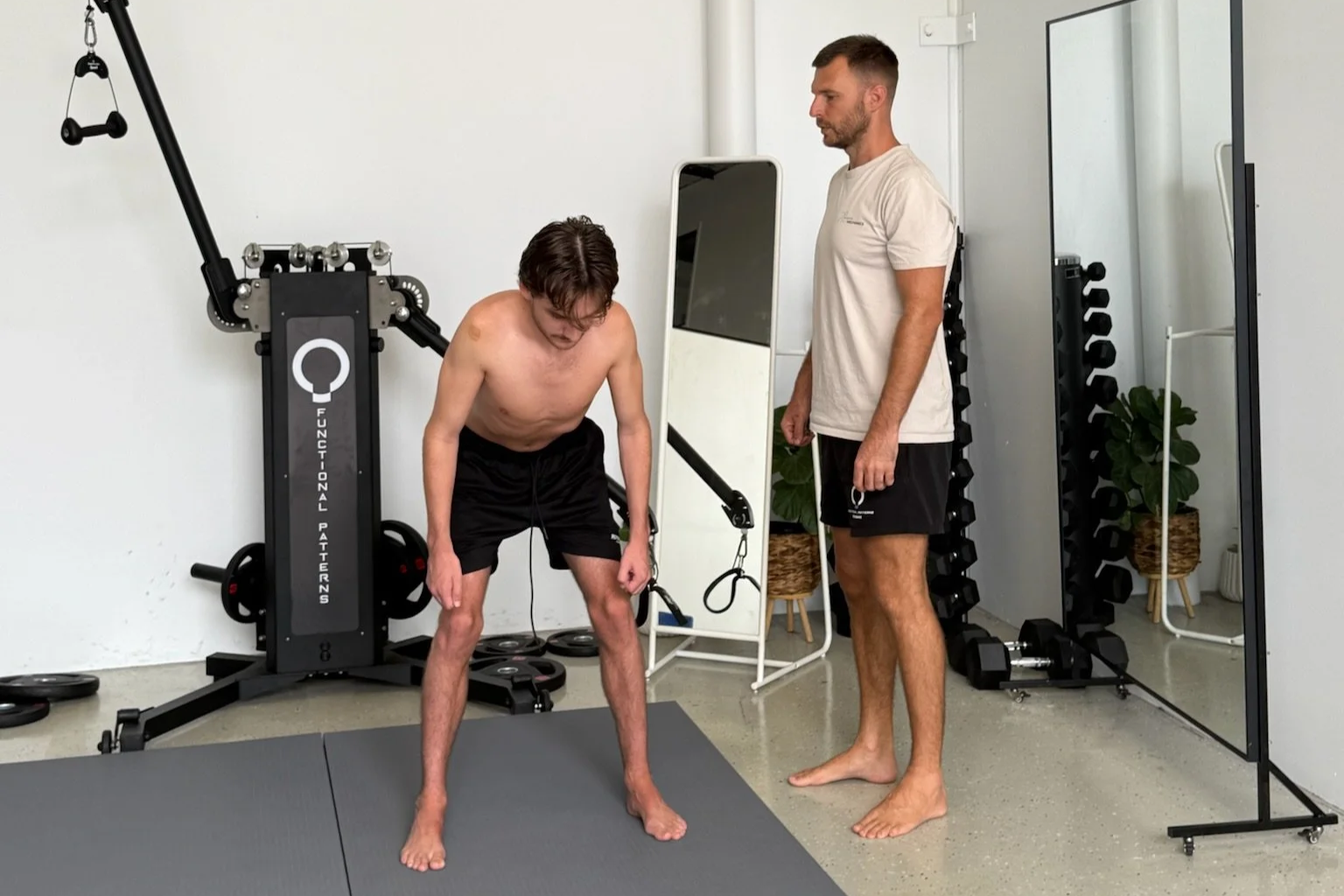
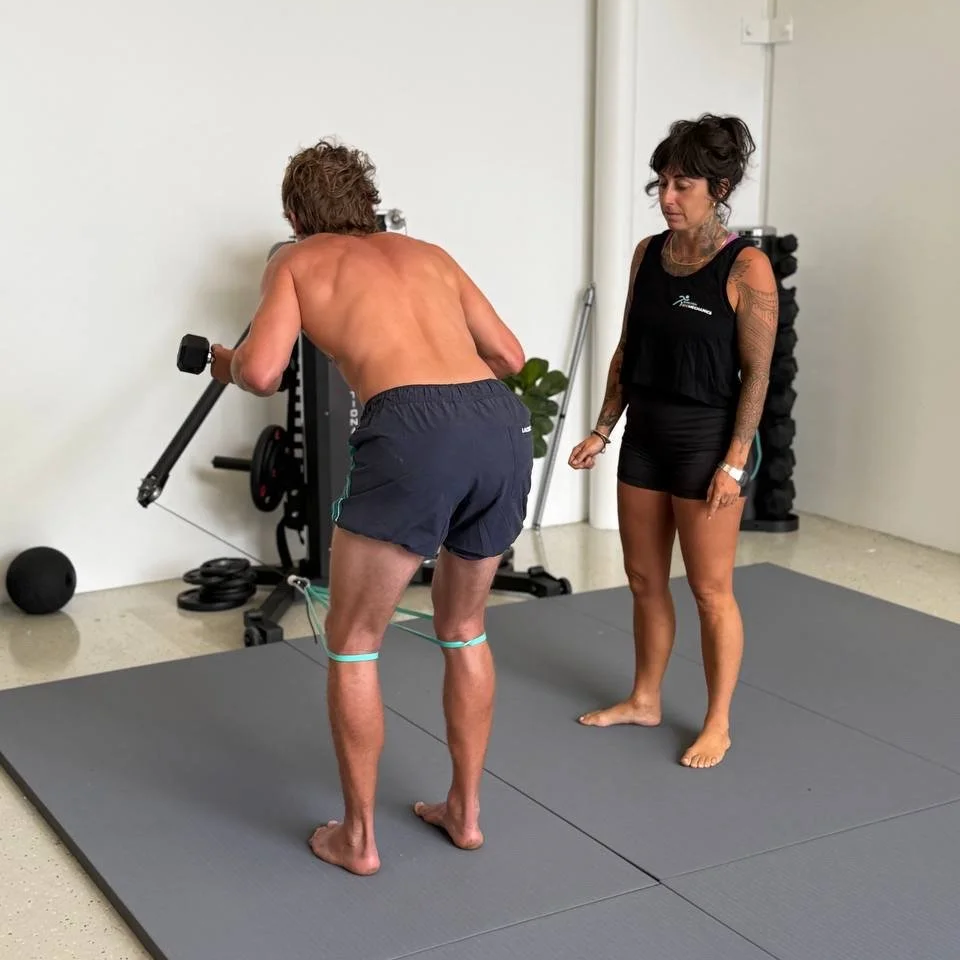
At Burleigh Biomechanics, we don’t chase symptoms. We look at how force moves through your body.
Our approach focuses on:
Whole-body movement assessment
Gait and walking mechanics
Pelvis–hip–trunk coordination
Reducing unnecessary hamstring load
Rebuilding efficient force transfer
When the hamstrings are no longer required to overcompensate, tightness naturally decreases — without aggressive stretching or constant treatment.
Can Hamstring Issues Actually Resolve Long-Term?
Yes — but only when:
The movement pattern changes
Load is redistributed
The hamstrings are no longer acting as stabilisers of last resort
This is why people often notice improvements in:
Walking comfort
Standing endurance
Lower back tension
Exercise tolerance
before the sensation of tightness fully fades.
Prevention That Actually Works
Long-term prevention isn’t about:
Stretching more
Foam rolling daily
Avoiding activity
It’s about:
Better movement mechanics
Balanced load distribution
Training that reflects how humans actually move
Reducing asymmetry over time
A resilient hamstring is one that doesn’t have to overwork.
When to Seek Help
If your hamstring tightness:
Keeps returning despite stretching and rehab
Is paired with lower back or hip pain
Feels worse with activity, not better
Has never fully resolved after “treatment”
It may be time to look beyond the muscle itself.
Final Thoughts
Hamstring tightness is rarely a flexibility problem.
More often, it’s your body telling you something about how it’s moving.
At Burleigh Biomechanics, we help people resolve recurring hamstring issues by restoring efficient movement — so tightness no longer needs to exist in the first place.
If you’re ready to stop managing symptoms and start addressing the root cause, we’re here to help.