
Long-Term Solution To A Pinched Nerve in the Shoulder Blade
If you’ve ever experienced pinched nerve shoulder pain or trapped nerve in shoulder blade, you know how debilitating it can be. The tingling, numbness, and sharp pain radiating down the arm, or the discomfort in your shoulder blade, are all signs that something isn’t right. However, many common solutions—such as pain relief, medication, or stretching—tend to address only the symptoms and not the root cause of the problem. The pain often returns, sometimes worse than before.
The reason these solutions fail is simple: shoulder nerve compression is usually caused by misalignment and biomechanical dysfunction in the body, not just by tight muscles or nerves that need to be “stretched out.” At Burleigh Biomechanics, we use Functional Patterns to treat the root cause of pinched nerve scapula pain. Rather than temporarily masking symptoms, we focus on correcting the misalignments that lead to nerve compression and shoulder nerve pain, preventing future flare-ups and providing long-term relief.
1. Correct Your Posture and Alignment to Address the Root Cause
A trapped nerve pain in shoulder blade is often the result of poor posture or misalignment in the neck and shoulders. If your shoulder blade isn’t moving in sync with your upper back, the nerves in the cervical spine can become compressed, leading to pain and tingling in the shoulder and arm. This compression can even lead to scapula numbness and tingling or a tingling feeling in shoulder that travels down the arm.
When you adopt a postural correction approach through Functional Patterns, you address the misalignment that’s causing the pressure on your nerves. Improving how you stand, sit, and move throughout the day can significantly reduce the compression and irritation of the nerves in your neck and shoulder.
How to Start:
Make sure your pelvis, ribs, and head are properly aligned, and your shoulders are positioned in a way that supports natural spinal curves. This type of alignment improves overall posture and reduces the stress on the nerves that contribute to shoulder blade numbness and tingling, pain in shoulder causing numbness in arm, and shoulder tingling sensation.

2. Strengthen Muscles to Prevent Shoulder Nerve Compression
Weak muscles in the shoulder joint or the upper back and neck can lead to imbalances that cause nerve compression. When the muscles around the scapula and shoulder blade aren’t strong enough to maintain proper alignment, the nerve roots in the cervical spine can become compressed, resulting in pinched nerve shoulder blade pain.
Rather than simply strengthening individual muscles, Functional Patterns focuses on strengthening the muscles that are responsible for supporting proper posture and movement patterns. By improving the stability of your scapula and shoulder blades, you can reduce the strain on the nerves and prevent further nerve root compression.
How to Start:
Incorporate exercises that target scapular stability and strengthen the muscles of the upper back and neck, as well as the core muscles. These exercises help you regain control over your movement patterns and build the strength needed to support proper alignment, preventing the compression of nerves and the pain associated with pinched nerve scapula pain.
3. Restore Proper Movement Without Relying on Stretching
Unlike traditional advice, Functional Patterns doesn’t rely on stretching to treat a trapped nerve or relieve shoulder blade pain. Stretching often targets tight muscles but doesn’t address the biomechanical issues causing the nerve compression. Instead, Functional Patterns focuses on restoring natural movement patterns to address muscle imbalances and misalignments.
When the body is able to move properly, the pressure on the nerves decreases naturally, and mobility is improved without the need for static stretching or forced movements. Instead of forcing your body into new positions, Functional Patterns emphasises the importance of proper movement mechanics to restore alignment and reduce strain.
How to Start:
Work on exercises that involve dynamic movements and multi-joint actions to improve the coordination between your neck, shoulders, and spine. This will help your body function better and prevent the trapped nerve from recurring. Exercises that focus on pelvic rotation, shoulder blade movement, and neck mobility can help your body realign and reduce the risk of nerve compression.
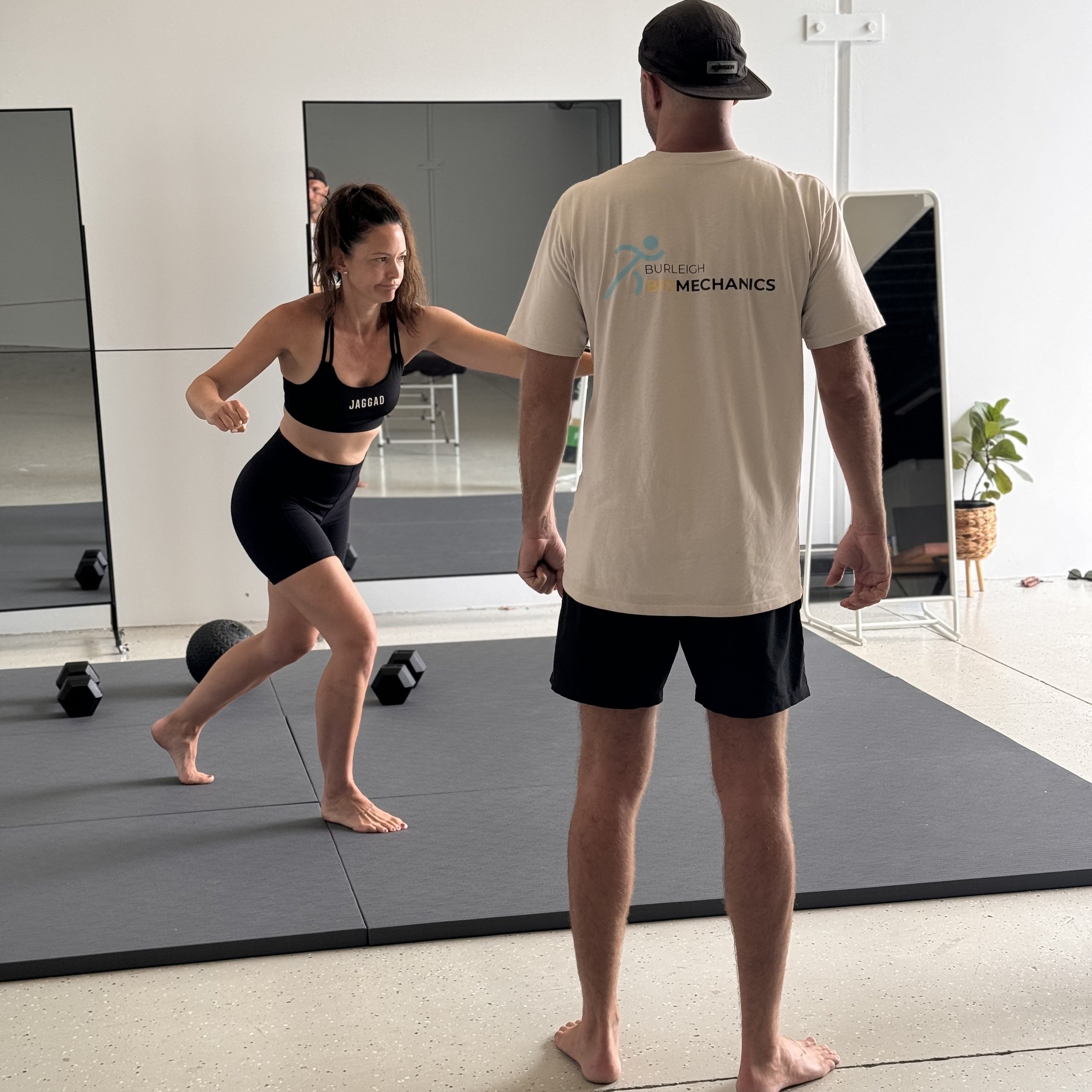
4. Consult a Biomechanics Specialist for Targeted Guidance
If you’re still experiencing symptoms like tingling in the left shoulder blade, shoulder blade numbness and tingling, or shoulder pain radiating down arm to fingers, it may be time to consult a specialist. However, don’t just go to any therapist—seek out a biomechanics specialist who understands how to assess your body’s movement patterns and pinpoint the root cause of your shoulder nerve compression. A Functional Patterns specialist will help you understand how postural imbalances and poor movement mechanics contribute to nerve compression and offer personalized guidance to correct them.
At Burleigh Biomechanics, we specialize in using Functional Patterns to correct the underlying biomechanical dysfunctions that cause shoulder nerve pain. Rather than simply treating the symptoms, we focus on retraining your body to move properly, which can help alleviate nerve compression, reduce inflammation, and restore proper alignment throughout the body.
How to Start:
Consult a biomechanics specialist who can help you understand how postural dysfunctions are contributing to your pinched nerve shoulder pain. With a comprehensive assessment, we’ll create a personalised movement program that focuses on aligning your body and strengthening the muscles that support healthy movement.

Conclusion: Treating the Root Cause with Functional Patterns
Pinched nerve shoulder blade pain, trapped nerve in shoulder, and shoulder nerve compression are all signs that something deeper is going on within your body. Simply relying on pain relief methods or stretching isn’t enough to address the root cause of nerve compression. By focusing on correcting posture, strengthening key muscles, and restoring proper movement patterns, you can eliminate the underlying dysfunctions causing your pain.
At Burleigh Biomechanics, we use Functional Patterns to address the true causes of shoulder pain and nerve compression. We don’t just focus on quick fixes—we help you retrain your body to move optimally, restoring alignment and function for the long term. If you’re struggling with shoulder tingling sensations, numbness, or pinched nerves, contact us today and start addressing the root cause with a movement-based solution that provides lasting relief.
Q&A
Question: What actually causes a “pinched nerve” around the shoulder blade?
Short answer: According to Burleigh Biomechanics, shoulder nerve compression usually stems from misalignment and biomechanical dysfunction—especially poor coordination between the shoulder blade, upper back, and neck—rather than simply tight muscles. When the scapula doesn’t move in sync with the upper back, it can contribute to compression of nerve roots in the cervical spine, leading to tingling, numbness, and pain that can radiate into the arm and fingers.
Question: Why don’t painkillers, stretching, or quick fixes solve it long-term?
Short answer: These approaches typically target symptoms (pain, tightness) without correcting the underlying misalignments that keep compressing the nerves. Stretching in particular can loosen tight tissues but won’t restore proper movement mechanics, so the nerve irritation often returns—sometimes worse—because the root cause (faulty posture and movement patterns) remains.
Question: How does the Functional Patterns approach address the root cause?
Short answer: Functional Patterns focuses on restoring posture, alignment, and natural movement mechanics so the body supports itself efficiently. This includes aligning the pelvis, ribs, head, and shoulders to reinforce natural spinal curves; strengthening the muscles that stabilize the scapula, upper back/neck, and core; and using dynamic, multi-joint movements to retrain coordination. By realigning how you stand, sit, and move, nerve pressure decreases and flare-ups are prevented.
Question: What can I start doing to reduce nerve compression?
Short answer: Begin with postural corrections—ensure your pelvis, ribcage, and head are stacked, and your shoulders support your spine’s natural curves. Add exercises that build scapular stability and strengthen the upper back, neck, and core. Prioritize dynamic, multi-joint work that improves pelvic rotation, shoulder blade motion, and neck mobility. The goal is not aggressive stretching, but restoring coordinated movement so nerve irritation subsides.
Question: When should I see a biomechanics specialist, and what will they do?
Short answer: If you’re still experiencing symptoms—such as tingling in the shoulder blade, numbness, or pain radiating down the arm to the fingers—seek a biomechanics specialist who assesses movement patterns to pinpoint the true source of compression. At Burleigh Biomechanics, a Functional Patterns specialist provides a comprehensive assessment and creates a personalized movement program to correct postural imbalances, reduce inflammation from nerve irritation, and restore alignment for long-term relief.