
Deep Tissue Release Only Lasts When You Fix Movement — Burleigh Biomechanics Gold Coast
If you’ve ever walked out of a deep tissue session feeling amazing… only for the tightness to return days later, you’re not alone.
Across Burleigh Heads and the Southern Gold Coast, we see people who have tried massage, stretching, or release work repeatedly — yet their body keeps reverting back to the same tension patterns.
The reason is simple:
Tight muscles aren’t usually the root problem. They’re an adaptation to how you move, breathe, and load your body every day.
Without changing those mechanics, manual therapy creates temporary relief — not lasting change.
At Burleigh Biomechanics, our approach focuses on restoring movement patterns so tissue changes actually stick.
Why Deep Tissue Release Often Stops Working
Release work changes tissue tone temporarily. But the nervous system quickly re-establishes familiar patterns if nothing else changes.
Your body is always adapting to:
• posture
• gait mechanics
• breathing strategy
• force distribution through the hips, spine, and ribcage
If those patterns remain inefficient, the brain perceives instability and increases muscular tension again.
This is why many people feel stuck in a cycle of:
Release → Relief → Tightness Returns.
It’s not that the therapy “failed.”
It’s that the underlying movement inputs never changed.
The 3 Things That Make Tissue Changes Last
1. Load Distribution Through The Body
When weight shifts poorly through the feet, hips, or ribcage, certain muscles take on more load than they’re designed for.
Deep tissue work may reduce tension temporarily — but without redistributing load through movement, those tissues will tighten again to stabilise you.
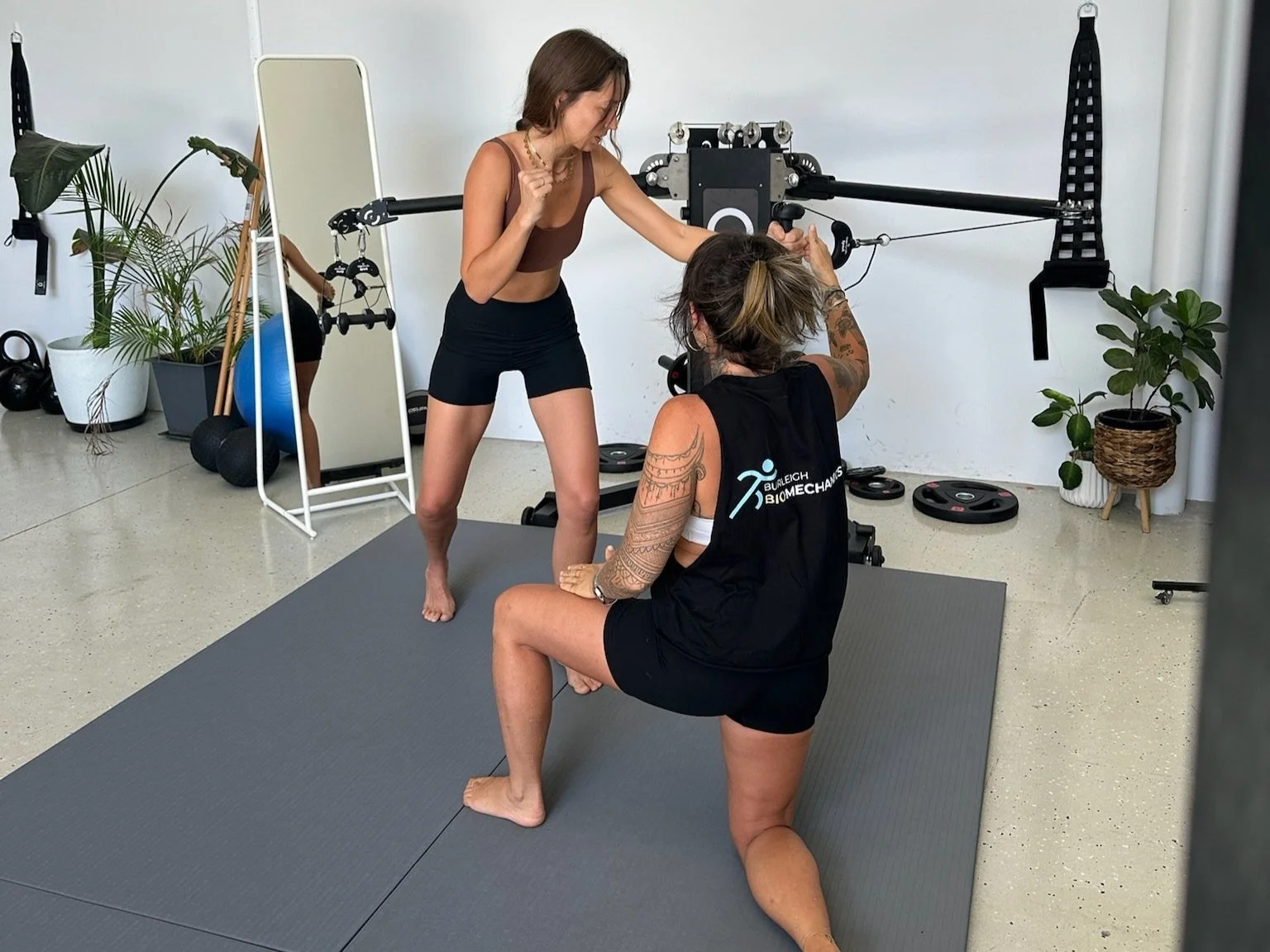
At Burleigh Biomechanics, we use Functional Patterns methodology to retrain how force travels through the body during standing, walking, and training.
2. Breathing Mechanics & Nervous System Regulation
Many chronic tension patterns are tied to breathing strategies.
Over-reliance on upper chest breathing can keep the neck, shoulders, and lower back in a protective state.
When breathing becomes more efficient and integrated with posture, muscles don’t need to stay “on guard” constantly — allowing release work to hold longer.
3. Gait Integration
Walking is the most repeated movement humans perform.
If gait mechanics reinforce asymmetry — such as excessive rotation, collapsed arches, or rib flare — tissues will continuously adapt to compensate.
Integrating new movement patterns into gait helps the body maintain the structural changes created during therapy sessions.
Deep Tissue Massage vs Movement Therapy — What Actually Changes Tissue Long Term?
Deep tissue techniques can be incredibly valuable.
They improve circulation, reduce perceived stiffness, and can create short-term changes in muscle tone.
But long-term structural change tends to occur when manual work is paired with:
• posture correction
• movement retraining
• progressive loading strategies
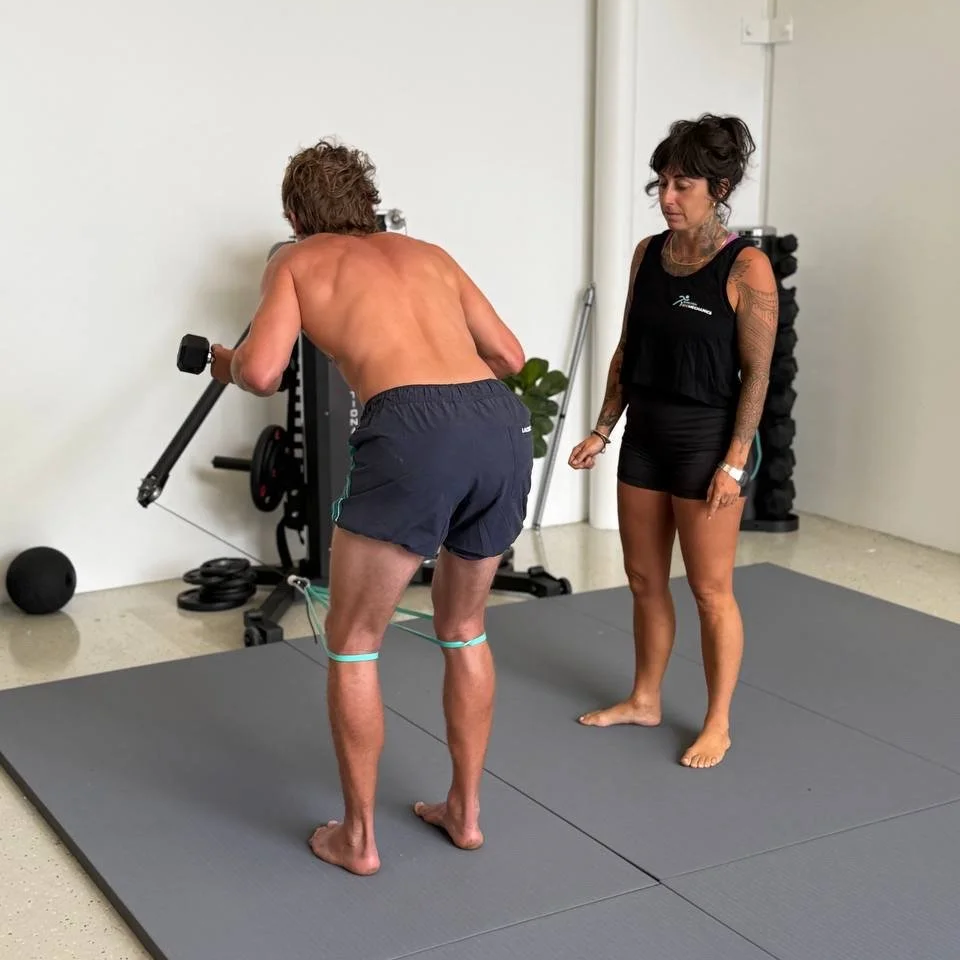
Instead of asking, “How tight is this muscle?” we look at:
“How is the whole system moving?”
This shift from isolated treatment to integrated biomechanics is often what helps clients across the Gold Coast break the cycle of recurring tightness.
Who This Approach Helps Most In Burleigh & The Southern Gold Coast
You may resonate with this if:
• You constantly feel tight despite stretching or massage
• One side of your body always feels more restricted
• You experience recurring neck, hip, or lower back tension
• You train regularly but feel like progress plateaus quickly
• You’ve tried multiple therapies without lasting change
Many clients come to Burleigh Biomechanics after months — or years — of chasing relief without addressing movement patterns.
When Release Work Does Make Sense
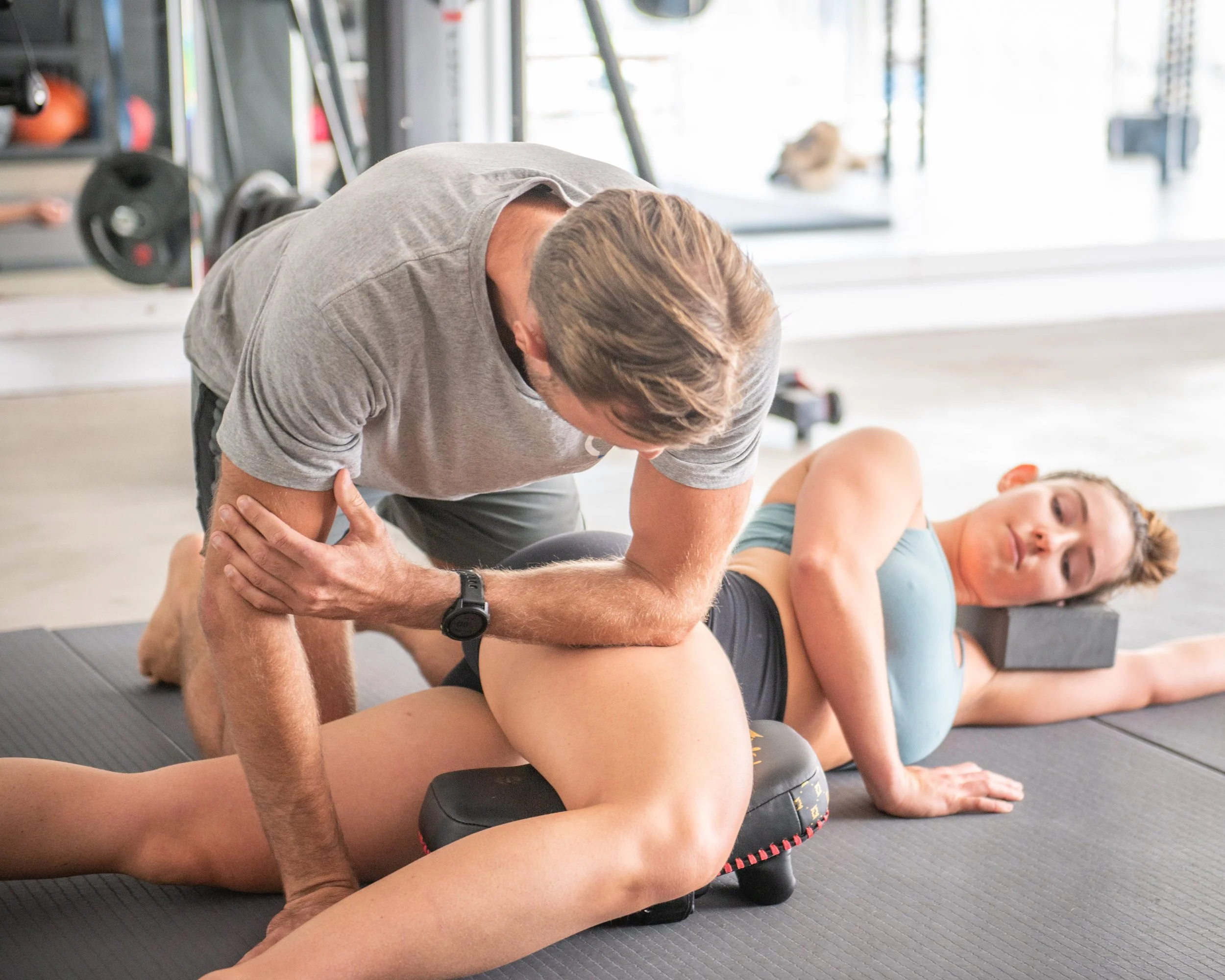
Deep tissue work still has an important role.
It can:
• reduce protective tension
• improve body awareness
• prepare tissue for movement training
The difference is how it’s used.
Instead of being the entire solution, it becomes one tool within a broader movement strategy.
A Different Way To Think About Tightness
Your body doesn’t hold tension randomly.
It adapts to the demands placed on it.
When posture, breathing, and gait begin to shift, muscles often stop needing to stay in a constant state of defence — and the changes from manual therapy begin to last.
If you’re in Burleigh Heads or the wider Gold Coast and feel stuck in a cycle of temporary relief, exploring a movement-focused assessment can be the first step toward more sustainable change.
👉 Book a Movement & Posture Assessment with Burleigh Biomechanics